Over 25 Million Downloads
Our Podcast
Eavesdrop on Lisa, Deb, and Joseph as they engage in lively, sometimes irreverent conversations about a wide range of topics and dream analysis through the lens of depth psychology provided by Carl Jung.
Over 25 Million Downloads
Our Podcast
Top five listener favorites

Spotify

Apple

YouTube

Tune In

Pandora

SPLITTING: Understanding What Divides Us
We seem hard-wired to split the world into polarities: right/wrong, either/or, victory/defeat, Democrat/Republican. Infants and toddlers have not yet achieved the developmental capacity for complexity; they are believed to split their feelings toward caretakers into “good” and “bad,” depending on whether their needs are being met in the moment.
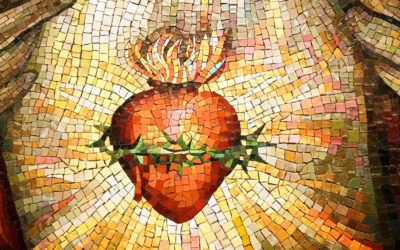
The Wounded Healer
Jung’s dialectical process, we work together to discover “the curative powers in the patient’s own nature.” Just as every wounded patient has inner health, every healer has an inner wound. If consciously known and borne, the analyst’s wound serves the healing process.
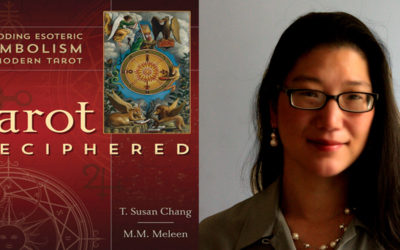
Tarot, Divination & the Symbolic Life
. The archetypal symbols in the tarot’s 78 card deck offer gateways to meaning and mystery. Jung says symbols act as transformers—life energy is converted from a lower to higher form by the amplification that consciousness provides. Tarot divination is intended to break from the mundane and court the numinous.
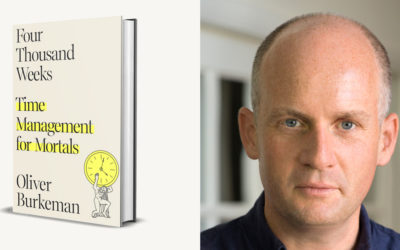
Time & Truth About Its Use
Guest Oliver Burkeman states in his new book, Four Thousand Weeks: Time Management for Mortals, that “outrageous brevity is life’s defining problem.” At age 80, you’ll have had a paltry 4,000 weeks. Such brevity is breathtaking, so we create defenses against the reality of finitude. We distract ourselves with the belief that fulfillment lies in the future, that plans and goals prove purpose, and that we can achieve almost any number of things by being more efficient/motivated/healthy—or just overall exceptional. Paradoxically, embracing life’s limitations can open us to what Jung called “a new attitude”—an inner pivot from the daily grind to seeing and seizing life’s possibilities. Time is not our adversary, the present is not hostage to the future, and we can choose to be alive while we’re alive.

The Cosmic Meaning of Consciousness
In Answer to Job, Jung states, “Whoever knows God has an effect on him.” If, as Jung claims, individual human consciousness affects God, what we are matters monumentally. When we serve our neuroses, the gulf between ego and Self widens. Pursuing individuation not only sets our personality in right order, it permits our personal experiences to enrich the collective unconscious.
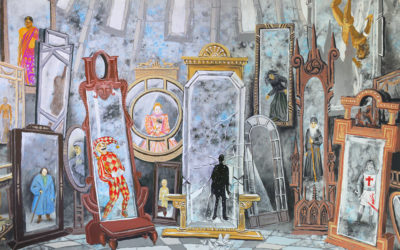
ARCHETYPES
Jung was then able to posit archetypes as a predisposition to form representations of universal human experiences and mythological motifs, such as marriage, the hero’s journey, and death/rebirth. For Jung, archetypes are innate psychic organs that “have a positive, favourable (sic), bright side that points upwards [and] one that points downwards…”

PAYING ATTENTION: What Are You Spending It On?
We plainly pay attention, using the finite currency of time and energy issued in the 24-hour increments that add up to a life—well spent? We have choices and constraints about how we allocate our attention, and today’s world competes fiercely for it in unprecedented ways. No wonder, for power is the ability to command or hijack attention, even if it warps reality with untruths.

LETTING GO: When Is It Time?
Should we hang in and hang on – or let go? When does perseverance become pointless, or hope turn rancid in refusal to accept disappointment, defeat, or depression?

THRESHOLD: Moving Between the Realms
In medieval times, the threshold was a plank that kept barnyard “threshings” outside the house. In the sciences a threshold is the limit of magnitude or intensity that must be exceeded for a definitive change to occur. In human development life stage thresholds are marked and recognized through ritual. In psychoanalytic work the symbol is the threshold—a visible but not literal representation that calls consciousness to apprehend a larger, unseen reality.

THE UNSPOKEN WOUNDING OF MEN
Phallos, the central archetype of a man’s psyche, was once worshipped as sacred. Its urgent, dynamic, and fertilizing power was split off with the rise of ascetic monotheism and banished to the unconscious. Misplaced and maligned, it surfaces as resentful passivity, fear of passion, confusion of values, and reluctance to take action.

EXTROVERSION!
Although Jung’s theory of typology is the foundation of various personality assessments, it is important to appreciate its profundity as Jung’s theory of consciousness. The four functions of consciousness – sensation, intuition, thinking, and feeling–are governed by two attitudes, extraversion, and introversion. Jung defines extraversion as “an attitude type characterized by concentration of interest on the external object.”

The Power of NO
Fear of social rejection, workplace retaliation, or family conflict can erode our healthy no, leading to resentment, an uncertain sense of self, and inability to answer the call to life. We also need to be able to say no to our own bad habits, rigidities, and avoidance of challenges. No is robust and can open space for self-determination and authenticity. When we find our no, we also discover that yes has been waiting for us, and it is alive and inviting.