Over 25 Million Downloads
Our Podcast
Eavesdrop on Lisa, Deb, and Joseph as they engage in lively, sometimes irreverent conversations about a wide range of topics and dream analysis through the lens of depth psychology provided by Carl Jung.
Over 25 Million Downloads
Our Podcast
Top five listener favorites

Spotify

Apple

YouTube

Tune In

Pandora

CAUSAL OR CREATIVE: Is History Destiny?
The Roman god Janus had two faces. They looked in opposite directions, representing dualities, especially beginnings and endings, past and future. Psychotherapy often begins by facing the past and understanding its influence on the present. Belief in the past as unalterably determinative, however, can imply that personal history is a single, all-powerful god—as if Janus fixed on yesterday. Jung took special interest in psyche’s purposive and creative energy—the face Janus turned toward the future. Incarnating our innate potential, which Jung termed the individuation process, is the process of engaging our capacity for growth and wholeness. Life’s road ahead has new possibilities, which is why we launch the new year in honor of Janus, for it is he who presides over all new beginnings.

THE GETHSEMANE ENCOUNTER
The Garden of Gethsemane is the place of life crisis; it permits no escape or compromise. There, we suffer the agony of choosing between personal will or willing submission to something greater.
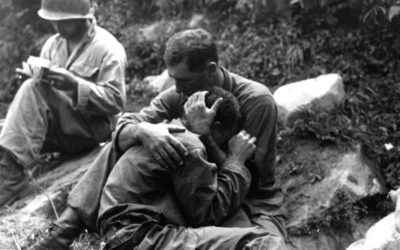
MORAL INJURY: Violation of Meaning
Moral injury violates our sense of justice, loyalty, and meaning—and creates a storm in the soul. Those who directly affect others’ lives are most at risk of suffering irreconcilable conflicts between behavior and belief: military, police, medical, educational, and other human service providers. The purported “cost of doing business” also calls us to confront institutional shadow–moral injury does not belong to the individual alone. The integrity of organizational and community values plays an important part in condoning morally distressing situations—and should play a role in healing the injured. Conflicts between actions and values are inevitable in life, and the core of being human is our unique capacity for choice. There is no way to escape shadow, and we are more than our mistakes. They are neither our totality nor our destiny.
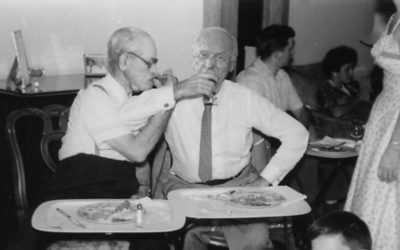
Jung & Freud: From “Bro” to Broken
We welcome Jungian colleague, psychiatrist, and historian Dr. Bert Price, whose research in Vienna during a 2019 international conference led to the discovery of new facts regarding the famous friendship—and break-up—of Jung and Freud. Following lively correspondence, the two men met in Vienna and talked for 13 hours. They continued over the next three days, and after attending the Wednesday night meeting of Freud’s Vienna circle, took a “spirited” walk to a tattoo parlor, stirred by the mythic significance of “marking” their newfound bond.

HUNTING: An Archetypal Perspective
To hunt is to engage the opposites: the hunter must attune and align with nature in order to kill part of it

FAILURE as TEACHER
Failure is a call to self-confrontation, humility, and resilience. We can recognize the limits of our conscious attitude and our dependence on the unconscious. Failure can imbue us with a higher sense of purpose that is in service to a greater good, including our own.

CAUGHT IN THE CONFLICT: The Tension of Opposites
Holding the tension between opposites was one of Jung’s foundational precepts. Although contradictory views are often a better witness to truth than one-sided conviction, beliefs and decisions often serve to relieve ambiguity, anxiety, and threat. Jung says, “The ego keeps its integrity only if it does not identify with one of the opposites, and if it understands how to hold the balance between them.”

Amor Fati: Love of One’s Fate
In Greek mythology, three Fates represented life forces beyond our control. One spun the thread of life, another determined its length, and the third cut it. Jung, however, understood that fate was also the external expression of an internal situation that had not been made conscious. In other words, we may unconsciously participate in creating our own misfortune and call it bad luck, injustice—or fate. How we orient ourselves to what happens to us is crucial, and working toward self-awareness helps us find a path between feeling powerless and seeking control. Ultimately, however, we are called to embrace life as it is, not as we wish it to be. This means moving beyond ego-consciousness to discover the inner center Jung called the Self. If we know we are part of something larger, we can accept our authentic nature, say yes to life in the face of uncompromising reality, and love our fate.
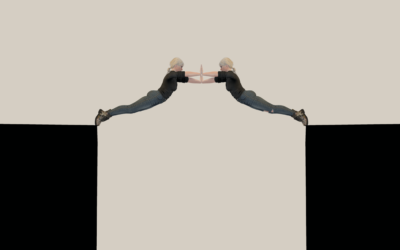
TRUST: The Bedrock of Relationship
Intimate attachments, workplace effectiveness, and stable social systems depend on our ability to rely on one another. Trust is the foundation of social exchanges and benefits, from affection to achievements. Erik Erikson mapped stages of human psychosocial development and found that establishing basic trust in the first 18 months of life was formative for later life.

FORGIVENESS OR FURY: Finding a Way Forward
Forgiveness has long been the province of morality, virtue, and religious values. Psychologically, forgiveness requires the capacity to hold both the magnitude of the injury and the humanity of the injurer. There are doable steps toward this goal, beginning with acknowledging and mourning the wrong yet forgoing retaliation. Righteousness and anger provide only illusory power and can be chronic and corrosive.

DUPED: What Makes Us Gullible?
Jung says, “The more one turns to the light, the greater the shadow behind one’s back.” Unacknowledged shadow can increase vulnerability to coercive dealings and regrettable decisions. We may find ourselves scammed, ripped off, and left holding the bag. Why didn’t we see it coming? Mostly because our denied fears and desires create blind spots others manipulate. Advertisers, hucksters, and con men prey on our fear of danger and disapproval and our quest for security and status. Gullibility is marked by misplaced trust and willful witlessness. We may not pause to reflect, research a decision, or seek neutral counsel. It is often relieving to trust an external authority rather than bear the anxiety and responsibility of choosing. When we fail to see our own shadow, we may be unable to recognize it in others.

REALITY AS MEDICINE
The nature of reality may be a complex philosophical question, but from a psychological viewpoint, reality is largely a question of adaptation to the truths of our inner and outer worlds. How well do we manage psychic life and the electric bill? Science fiction writer Philip Dick pithily states: “Reality is that which, when you stop believing in it, doesn’t go away.” Multiple realities challenge us. We live in shared social realities, from embracing niceties to being steeped in beliefs and a need to belong. We also may access the objective realities of verifiable facts and scientific data. And we experience subjective realities of emotion, intuition, and unconscious influences. We can feel our feelings, differentiate between levels of reality, and choose which to apply to a particular situation or decision. Unclouded acceptance of reality is medicinal.